








Accounting
Can’t Find Skilled Accounting Talent? Why Companies Are Turning to Outsourcing
Discover why U.S. businesses are outsourcing accounting functions to tackle talent shortages and enhance financial performance.
Article
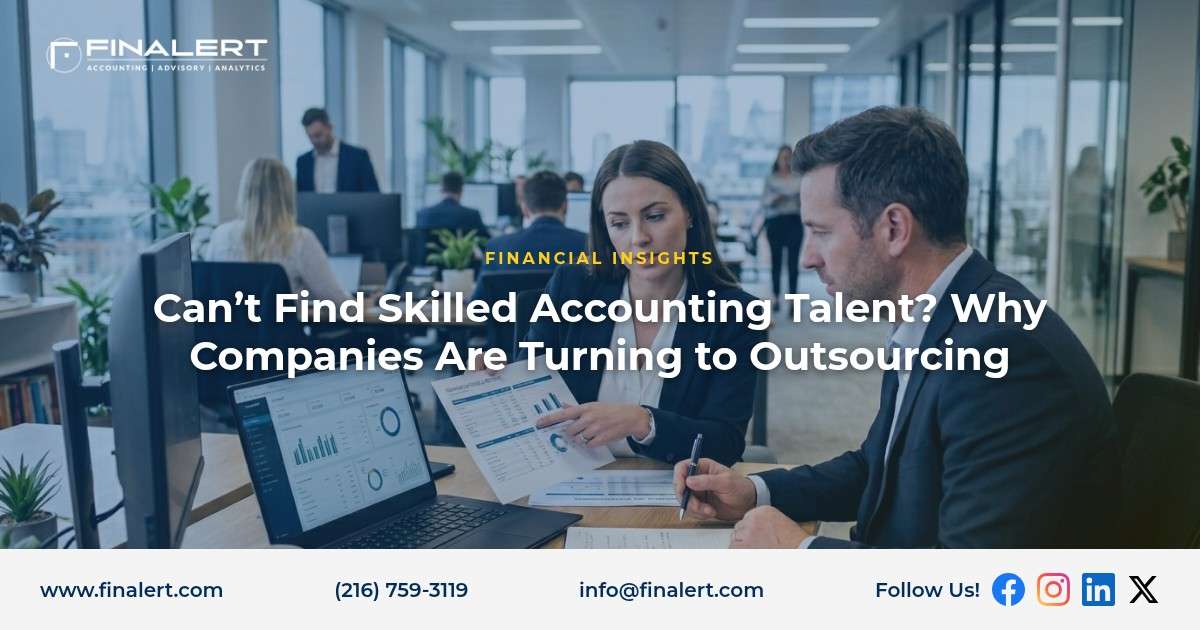
Most U.S. businesses struggle to find skilled accounting talent, leading to costly errors and compliance issues that could have been avoided. Whether you’re a small startup or a large corporation, the pressure to maintain accurate financial records and navigate the complexities of tax law can be overwhelming. As the demand for competent accounting professionals rises, the availability of qualified candidates diminishes. In fact, a growing number of companies are discovering that outsourcing their accounting functions not only alleviates this burden but also provides strategic advantages that can enhance overall business performance. This article explores why more businesses are turning to outsourcing for their accounting needs, how it can address specific pain points, and what you should consider if you’re contemplating this shift.
Why Skilled Accounting Talent Is Hard to Find in the U.S.
In recent years, the U.S. has experienced a significant shortage of skilled accounting professionals. The reasons for this trend are multifaceted, involving everything from demographic shifts to evolving business needs. For instance, many CPAs are nearing retirement age, creating a vacuum that younger practitioners have yet to fill. According to the American Institute of CPAs (AICPA), the number of accounting graduates is not keeping pace with the demand for talent. This shortage becomes particularly problematic during tax season, when businesses must compile complex filings, often under tight deadlines. A small tech startup, for example, found itself scrambling for help when it faced an IRS audit due to inaccurate financial reporting. The absence of an experienced accountant led to penalties and reputational damage.
Moreover, the rise of remote work has changed the landscape of accounting talent. Many companies are willing to pay a premium for remote employees, making it harder for smaller firms to compete. Business owners often underestimate the long-term costs associated with hiring and training in-house staff. This is especially true when considering benefits, continuing education, and potential turnover. In our experience, many mid-sized businesses find that the expenses of maintaining a full-time accounting team often outweigh the costs of outsourcing, particularly when specialized skills are required.
The complexity of regulatory compliance is another contributing factor to the talent shortage. As the IRS and state tax agencies continue to update regulations, the need for accountants who are not only knowledgeable about current tax laws but also adept at navigating compliance issues has never been greater. A mid-size manufacturer recently faced fines due to their failure to comply with new state sales tax laws, a situation that could have been mitigated with the guidance of an experienced accountant familiar with the evolving landscape.
Finally, many businesses simply do not understand the value of a skilled accountant until it’s too late. They often rely on entry-level staff to manage critical functions, which can lead to costly mistakes. For example, one retail company discovered discrepancies in their financial records only after they outsourced their bookkeeping. This oversight cost them thousands and delayed their financial reporting, impacting their ability to secure essential funding.
How Outsourcing Accounting Functions Can Solve Talent Shortages
Outsourcing accounting functions offers a viable solution to the talent shortage plaguing many businesses. By leveraging external expertise, companies can access a wider pool of skilled professionals without the burden of recruitment and training. A growing number of businesses are discovering that outsourcing allows them to focus on core operations while ensuring that their accounting needs are met by experts. For instance, when a healthcare provider struggled to manage their complex billing processes, they turned to an outsourced accounting firm, which not only streamlined their billing but also improved their cash flow by offering better insights into accounts receivable management.
One of the most significant advantages of outsourcing is the ability to scale resources based on business needs. During peak times, such as tax season, businesses can quickly ramp up their accounting capabilities without the long-term commitment of hiring additional staff. This flexibility allows companies to respond to market demands more effectively. For example, a seasonal retailer that experiences revenue spikes during the holiday season can outsource additional bookkeeping support during those months, thus avoiding the costs associated with hiring temporary staff.
Moreover, outsourcing firms often come equipped with advanced technologies and software that small to mid-sized businesses might not be able to afford on their own. This access to cutting-edge financial tools can lead to increased efficiency and accuracy. A technology startup that previously relied on manual processes to track expenses found that by outsourcing their financial reporting, they were able to cut down on errors and produce reports in real-time, enabling faster decision-making.
Furthermore, the expertise of an outsourced team can lead to better strategic planning and financial forecasting. Many businesses overlook the importance of thorough financial analysis, often resulting in missed opportunities. When a manufacturing company enlisted an outsourced CFO advisory service, they received valuable insights into budgeting and forecasting, which helped them make informed decisions about capital expenditures and inventory management.
What to Look for When Choosing an Outsourcing Partner
Choosing the right outsourcing partner is critical to ensuring that your accounting needs are met effectively. Businesses should look for firms that specialize in their industry, as familiarity with specific regulations and market dynamics can significantly impact the quality of service provided. For example, a nonprofit organization may require a firm with expertise in fund accounting and compliance with IRS regulations governing charitable organizations.
It’s also essential to assess the technology that an outsourcing partner utilizes. Modern accounting relies heavily on software that can automate processes, enhance accuracy, and provide real-time insights. Firms that use cloud-based solutions can offer businesses the flexibility to access their financial data from anywhere, which is increasingly important in today’s remote work environment. A small e-commerce retailer, for instance, benefited from outsourcing when they switched to a cloud-based accounting system that allowed them to easily track sales and expenses on a daily basis.
Another critical factor is the level of communication and support provided by the outsourcing firm. Business owners should seek partners who prioritize transparent communication and offer ongoing support. Regular updates on financial performance and proactive advice can help you stay on top of your financial health. A service-level agreement (SLA) that outlines expectations, deliverables, and response times can be incredibly beneficial in establishing clear communication standards.
Finally, consider the firm’s reputation and client testimonials. Look for evidence of successful partnerships and the ability to deliver results. Engaging with other businesses that have used the firm can provide valuable insights into their experience and effectiveness. For instance, a logistics company discovered significant savings and improved accuracy in their financial reporting after partnering with an outsourced accounting firm that had a proven track record in their industry.
Common Misconceptions About Outsourcing Accounting
Despite the clear benefits of outsourcing accounting functions, misconceptions often deter businesses from considering it as a viable option. One common myth is that outsourcing is only suitable for large corporations. In reality, small and mid-sized businesses stand to gain just as much—if not more—from outsourcing their accounting needs. A small restaurant chain, for example, was able to improve its financial management by outsourcing its bookkeeping and payroll services, which freed up resources for strategic growth initiatives.
Another misconception is that outsourcing equates to a loss of control. This is not necessarily the case; effective outsourcing partnerships can offer greater oversight and compliance. By working with a reputable firm, businesses can ensure that their financial practices align with IRS regulations and GAAP standards. When a consulting firm outsourced its accounting functions, it established regular check-ins and reporting metrics to maintain control over its financial health while benefiting from external expertise.
Many business owners also fear that outsourcing will lead to increased costs. While it is true that there is a cost associated with outsourcing, many businesses find that the long-term savings and value outweigh these initial expenses. For instance, a construction company that outsourced its accounting discovered that it spent less on accounting fees compared to the costs of hiring a full-time accountant, especially when factoring in benefits and training costs.
Lastly, some believe that outsourced accountants won’t understand the unique aspects of their business. However, reputable outsourcing firms take the time to understand their clients’ operations, goals, and industry nuances. For example, a software development company that outsourced its accounting was pleasantly surprised to find that their accountant not only understood their financial needs but also provided strategic advice that contributed to their growth.
How Finalert Can Help
When a growing e-commerce company struggled with multi-state sales tax compliance, Finalert’s team stepped in to review their financial practices. They identified gaps in their accounting processes and implemented a comprehensive bookkeeping and tax service that not only ensured compliance with state regulations but also optimized their overall financial strategy. With our bookkeeping services and tax services, this company was able to focus on scaling its operations while we handled the complexities of financial reporting and compliance.
Moreover, our CFO advisory services help businesses like yours navigate the intricacies of financial planning and analysis, ensuring that you have the insights needed to make informed decisions. Whether you’re looking to outsource your entire accounting function or need specific support, Finalert can provide tailored solutions that meet your unique challenges.
Conclusion
As U.S. businesses grapple with a growing shortage of skilled accounting talent, outsourcing has emerged as a strategic solution that not only alleviates this pain point but also enhances financial management capabilities. By tapping into external expertise, companies can focus on core operations while ensuring compliance and improving efficiency. If you’re considering how outsourcing can benefit your business, reach out to Finalert today to explore how our services can provide the support you need to thrive in a complex financial landscape.
Contact us to learn more about how we can help you successfully navigate your accounting needs.
